You can start baking sourdough with equipment you probably already own. A kitchen scale, a jar for your starter, a big bowl, and something to bake in will get you through your first loaf. Everything else makes certain steps easier, but you can add it later, once you know what your baking routine actually needs.
This guide walks through the tools in the order you'll use them: measuring, keeping your starter, mixing, proofing, baking, and cooling. For each one, you'll see what it does, what you can use instead, and whether it's worth buying now or later.
This article covers equipment only. Your starter, flour, water, and salt are ingredients, and they deserve their own guide.
Sourdough Baking Tools at a Glance
What you need to start baking and what can wait until later.
| Task | Start With | Upgrade Later |
|---|---|---|
| Measuring | Digital kitchen scale | Higher-capacity scale |
| Keeping starter | Food-safe jar | Dedicated starter jar |
| Mixing | Large bowl and sturdy spoon | Dough mixer or dough whisk |
| Handling dough | Hands and work surface | Dough scrapers |
| Final proofing | Cloth-lined bowl | Proofing basket |
| Baking | Recipe-specific equipment | Covered bread baker |
| Cooling and slicing | Cooling rack and bread knife | Upgrade as needed |
What counts as "essential" depends partly on your recipe and the kind of loaf you want. A free-form round loaf baked in a covered pot needs different gear than a sandwich loaf baked in a pan. Check your recipe's equipment list before you buy anything.
Tools for Measuring and Maintaining Your Starter
A Digital Kitchen Scale
If you buy only one thing for sourdough, make it a digital scale. Most sourdough recipes list ingredients in grams, and weighing them gives you the same amounts every time. A cup of flour can vary quite a bit depending on how you scoop it. A gram is always a gram.
Look for a scale that measures in 1-gram increments and has a tare button, which resets the display to zero. With tare, you can set your bowl on the scale, zero it out, add flour, zero it again, and add water, all in the same bowl.
A scale also helps with feeding your starter. When you feed it the same proportions each time, it's easier to notice when something changes, like a starter that's rising more slowly than usual.
A Food-Safe Starter Container
Your starter needs a home. A clean glass jar works well. Look for three things:
Room to grow: An active starter can double or more after a feeding, so choose a container with plenty of headspace.
Easy cleaning: A wide mouth makes it easier to stir, scrape, and wash.
A loose cover: You want to keep out dust and debris without sealing it airtight.
A rubber band or a strip of tape on the outside of the jar is a simple way to mark your starter's level right after feeding. When you check later, you can see exactly how much it rose. A branded starter crock is nice to have, but any suitable jar does the same job.
Tools for Mixing and Handling Sourdough
A Mixing Bowl With Room for the Dough
Sourdough rises slowly over several hours, so your bowl needs room for the dough to expand. Choose a size based on your recipe's batch size, and allow room for the rise the recipe describes.
You'll also need a way to cover the bowl during rest periods to keep the dough from drying out. A plate, a lid, a damp towel, or a reusable cover all work.
A Sturdy Spoon, Dough Mixer, or Dough Whisk
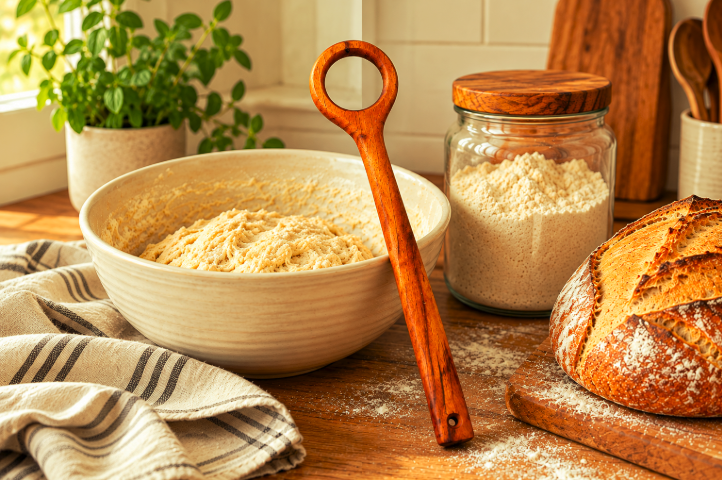
The first mix brings flour, water, and starter together into a shaggy dough. The initial mixture can be sticky and difficult to combine, and a flimsy spoon can bend or get stuck. You want something sturdy enough to work through it without dragging.
Your choice of tool depends on the dough. A stiffer, lower-hydration dough needs more strength. A wetter dough benefits from a tool that cuts through without clumping. Many bakers also finish mixing with wet hands.
You don't need a stand mixer. Many sourdough methods rely on hand mixing followed by a series of stretches and folds during the rise, which develops the dough without a machine.
At Gavula Studio, we handcraft a cherry wood sourdough dough mixer with a circular mixing end, sculpted handle, and copper accent. It's designed for bringing flour, water, and starter together during the initial mixing stage.
Explore our handcrafted cherry wood sourdough dough mixer.
Bowl Scrapers and Bench Scrapers
These two tools sound similar but do different jobs:
A bowl scraper is flexible and curved. It follows the inside of a bowl to get every bit of dough out and makes cleanup easier.
A bench scraper is flat and rigid. You use it on the counter to divide dough, lift and turn it while shaping, and scrape the work surface clean.
Neither one is required. A spatula and your hands can do the job. But if you find yourself fighting sticky dough every time you bake, a scraper is an inexpensive upgrade that helps a lot.
Tools for Proofing and Preparing the Loaf
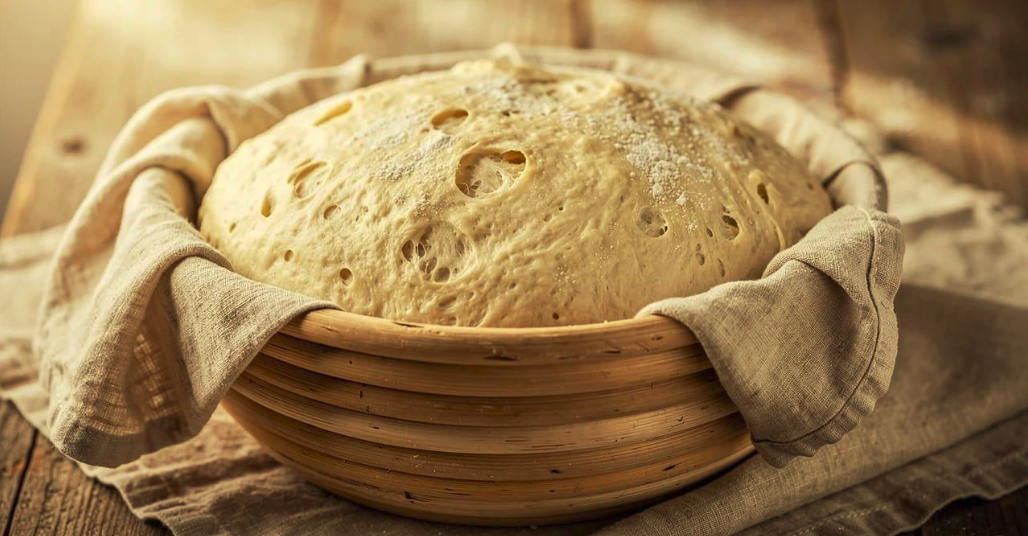
A Proofing Basket or Cloth-Lined Bowl
The final proof is the last rise after you shape the dough and before it goes into the oven. During this stage, a soft sourdough loaf tends to spread out unless something supports its shape.
That's the job of a proofing basket, sometimes called a banneton. But you can get the same support from something you already own: a bowl or colander lined with a clean kitchen towel and dusted generously with flour. The flour helps keep the dough from sticking to the cloth when you turn it out.
If you bake often, or you want the spiral flour pattern an unlined, floured basket can leave on the crust, a proofing basket is a reasonable upgrade. For your first few loaves, the towel-lined bowl works fine.
A Thermometer for Understanding Dough Temperature
Temperature has a big effect on how fast sourdough ferments. Within typical bread-making temperatures, warm dough ferments faster and cool dough ferments slower. That's why the same recipe can take noticeably longer in a cold winter kitchen than in a warm summer one.
A simple probe thermometer lets you check the temperature of your water and your dough, so you can understand why a batch is moving quickly or slowly. Some bakers also use one to check whether a finished loaf is baked through.
Think of a thermometer as a helpful guide, not a replacement for watching the dough itself. Rise, bubbles, and how the dough feels still tell you the most about when it's ready.
A Scoring Tool for Recipes That Require Scoring
Scoring means cutting a shallow slash into the top of the dough right before baking. It gives the loaf a controlled place to expand in the oven, so it doesn't burst open in random spots.
Many bakers use a lame, a handle that holds a thin razor blade. A very sharp knife or a clean razor blade can also work for basic cuts. What matters most is a sharp edge and a quick, confident motion, since a dull blade drags through the dough.
Handle blades with care. Store them covered, keep them away from children, and replace them when they dull. Not every recipe needs scoring. Many pan loaves skip it entirely, so check your recipe first.
Equipment for Baking, Cooling, and Slicing
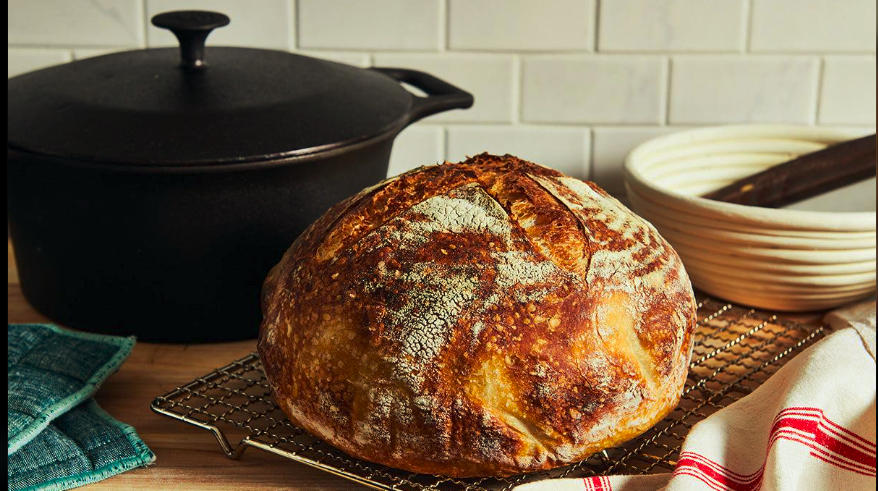
A Dutch Oven or Another Recipe-Appropriate Baking Setup
Covered baking is popular for round sourdough loaves for two reasons. A heavy preheated pot holds and radiates a lot of heat, and the lid traps the steam that rises from the dough. That moist early environment helps the loaf expand before the crust sets, which is a big part of the tall, crackly loaves you see online.
Still, sourdough doesn't require a Dutch oven. Many bakers use a baking stone or steel with a pan of water in the oven for steam, a sheet pan, or a loaf pan for sandwich-style bread. Each method works differently, so the best approach is to follow a tested recipe written for the equipment you have rather than trying to adapt one on the fly.
Whatever you use, check its temperature limits. Sourdough often bakes at high heat, and some lids, knobs, and handles aren't rated for it.
Heat Protection and Any Required Baking Liner
Good oven mitts are non-negotiable when you're lifting a lid off a very hot pot or reaching into a hot oven. Choose mitts that cover your wrists and are rated for high heat.
Some methods call for parchment paper, either to lower the dough into a hot pot or to keep it from sticking to a pan. Use it when your recipe calls for it and check its heat rating. Reusable bread slings are another option, but not every method needs a liner.
A Cooling Rack and Bread Knife
A cooling rack lets air circulate around the loaf so steam can escape instead of making the bottom crust soggy. Most recipes recommend letting the bread cool before slicing, since the inside keeps setting as it cools.
A serrated bread knife cuts through a crisp crust without crushing the soft crumb underneath. If you already own one, you're set.
What Should You Buy First?
You don't need to buy everything on this list before you start. Here's a simple order to follow:
Check your recipe and your kitchen. Read the equipment list in the recipe you plan to use, then see what you already have.
Prioritize measuring and baking. A digital scale and a workable baking setup for your recipe matter most.
Add tools that solve real problems. If sticky dough frustrates you, get a scraper. A proofing basket supports shaped dough while it proofs, though loaves that spread can also point to dough strength or fermentation.
Upgrade as your habits develop. Once you know how often you bake and what kind of bread you like, specialized equipment makes more sense.
If you're looking for a sturdy mixing tool for that first shaggy dough, take a look at our dough mixer.
The Sourdough Guide
Frequently Asked Questions
Helpful answers for your sourdough baking journey.
Do I need a stand mixer for sourdough?
No. Many sourdough methods use hand mixing followed by stretches and folds during the rise, which build strength in the dough without a machine. Some recipes do call for a mixer, so follow the method in the recipe you choose.
Do I need a complete sourdough starter kit?
Not necessarily. Kits are convenient, but you can put together the same equipment piece by piece, and you probably own several items already. A clean jar, a bowl, a towel, and a kitchen scale cover a lot of what a kit includes.
Does better equipment guarantee better sourdough?
No. Good tools make the process easier and more consistent, but they can't make up for a sluggish starter, under- or over-fermented dough, or rushed shaping. The health of your starter, how you manage fermentation, how you handle the dough, and how you bake it all matter more than any single tool.
